
Materials That Survive Salt Air, Sun and Forty-Degree Summers
The Algarve gives us roughly 320 days of sunshine a year. That’s not a nice-to-have, it’s the whole design brief. Here, outdoor space isn’t an afterthought tacked on to the “real” house — and often clients don’t realise it at first. It’s an extension of it.
Terraces, pool decks and covered lounges get used as hard as any living room, and we just love designing those spaces. It also means they need to survive that use — plus salt air, UV, and summers that regularly hit forty degrees.
That combination is merciless on materials. Salt corrodes metal fixings and frames. Sun bleaches and degrades synthetics. Heat warps, cracks and — in the case of cheap woven “rattan-style” plastics — can genuinely melt and collapse into a sad little heap after a couple of summers. We’ve seen it all happen. It’s not pretty, and it’s not cheap to keep replacing.
Invest once, properly
This is the single biggest mistake we see: treating outdoor furniture as the budget category, then patching the gaps every year as pieces fail one by one. A season or two in, you’ve got a mismatched Frankenstein terrace that undermines an otherwise beautifully designed home. Good outdoor furniture deserves the same investment as your sofa — it’s just working a much tougher shift.
Wood: go teak, and pick your finish
Teak is the gold standard, and for once, the hype is deserved. You have two paths:
Untreated (weathered) teak — zero maintenance. Left to the elements, it silvers to a soft grey and moves naturally with the climate over time.
Oiled teak — a warmer honey tone, maintained with annual oiling. More upkeep, richer colour.
Both are excellent. It’s a question of the look you want, and how much you enjoy an annual date with a tin of teak oil.
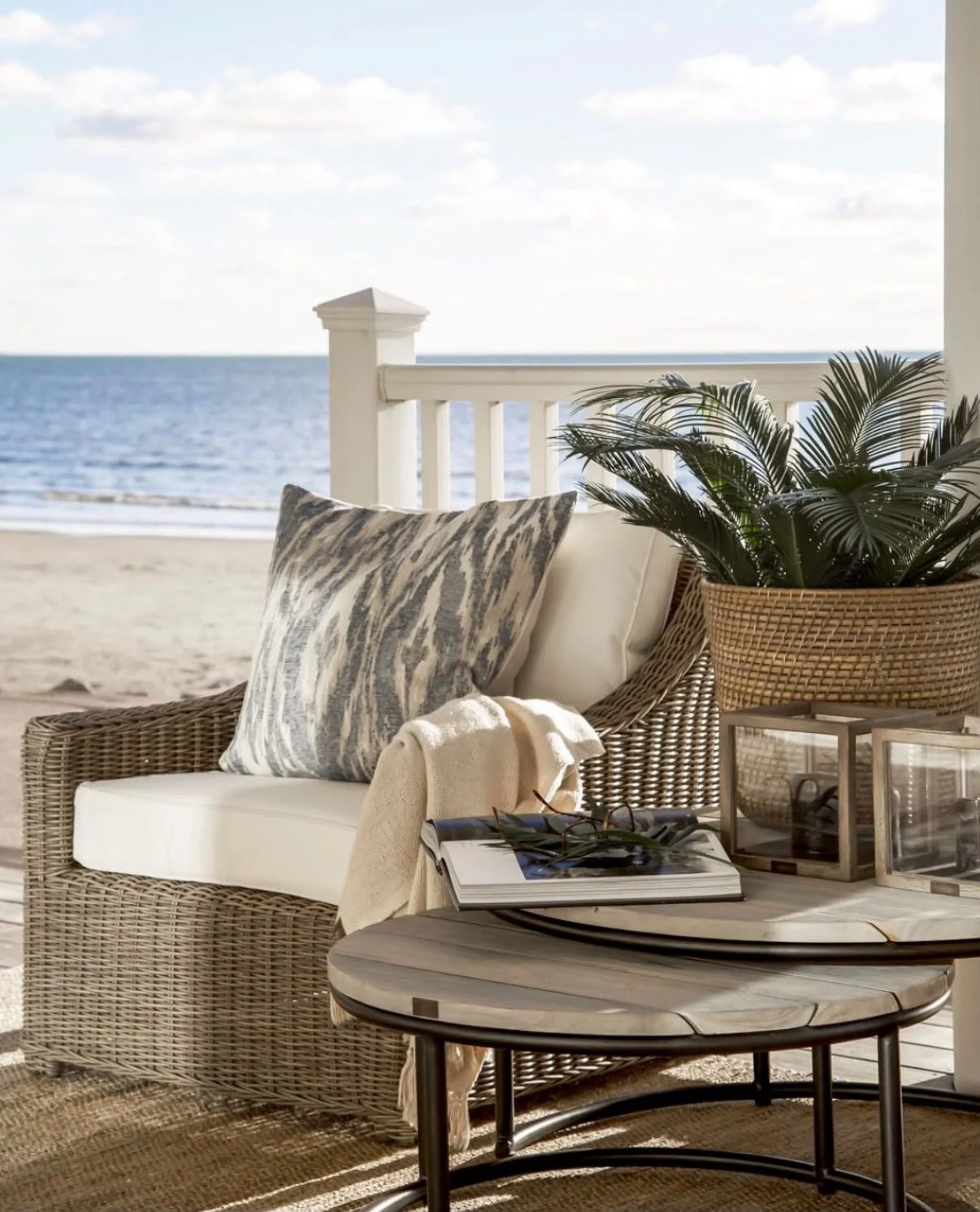
Rattan and woven synthetics — quality is everything
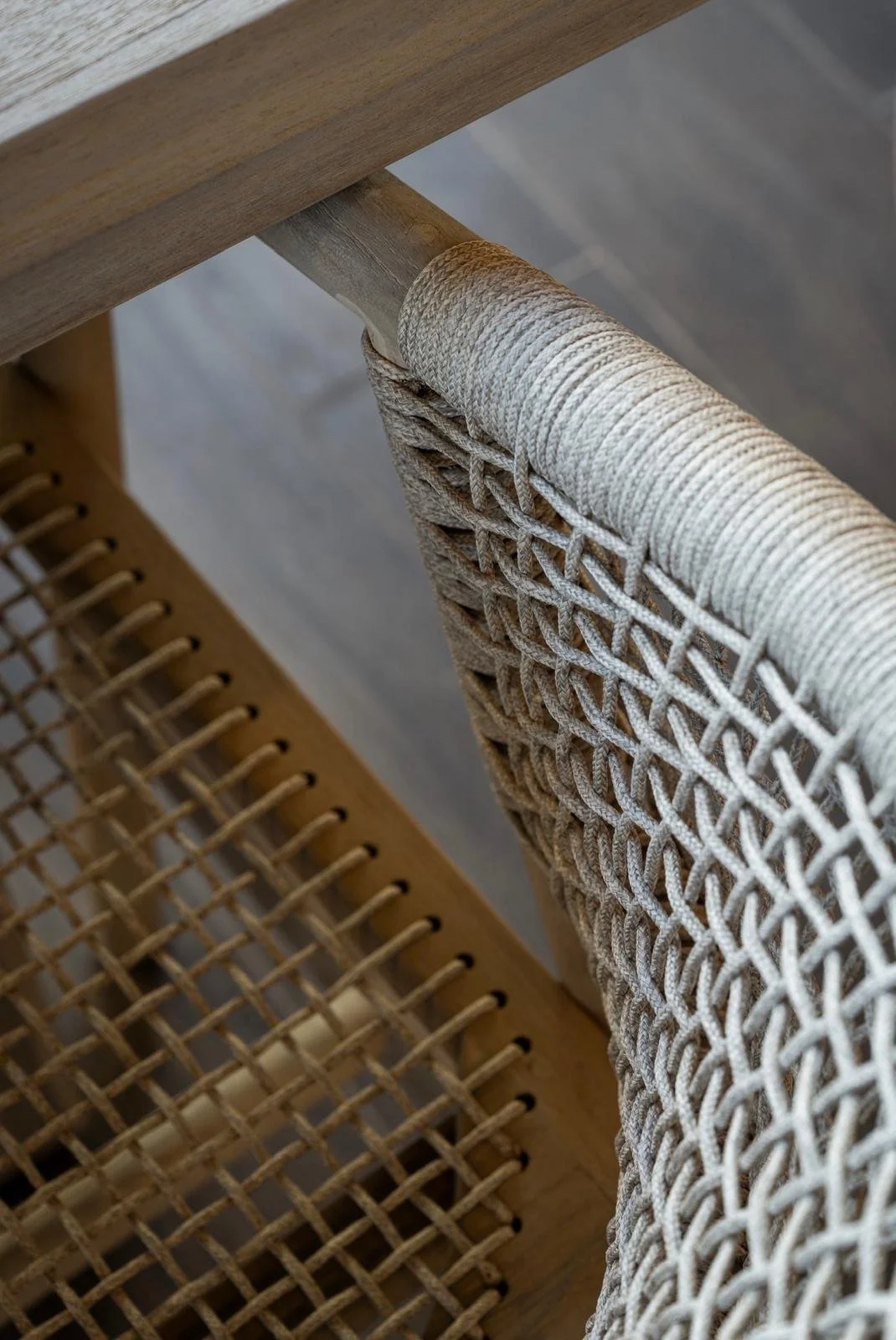
Woven furniture can absolutely work outdoors here, but only from brands that actually engineer it for sun and heat. This is exactly where the cheap versions collapse (sometimes literally) — the fibres aren’t UV-stabilised, and extreme heat makes them warp or implode. It’s not wood-versus-synthetic, it’s good-versus-bad. Buy well, and it holds beautifully for years.
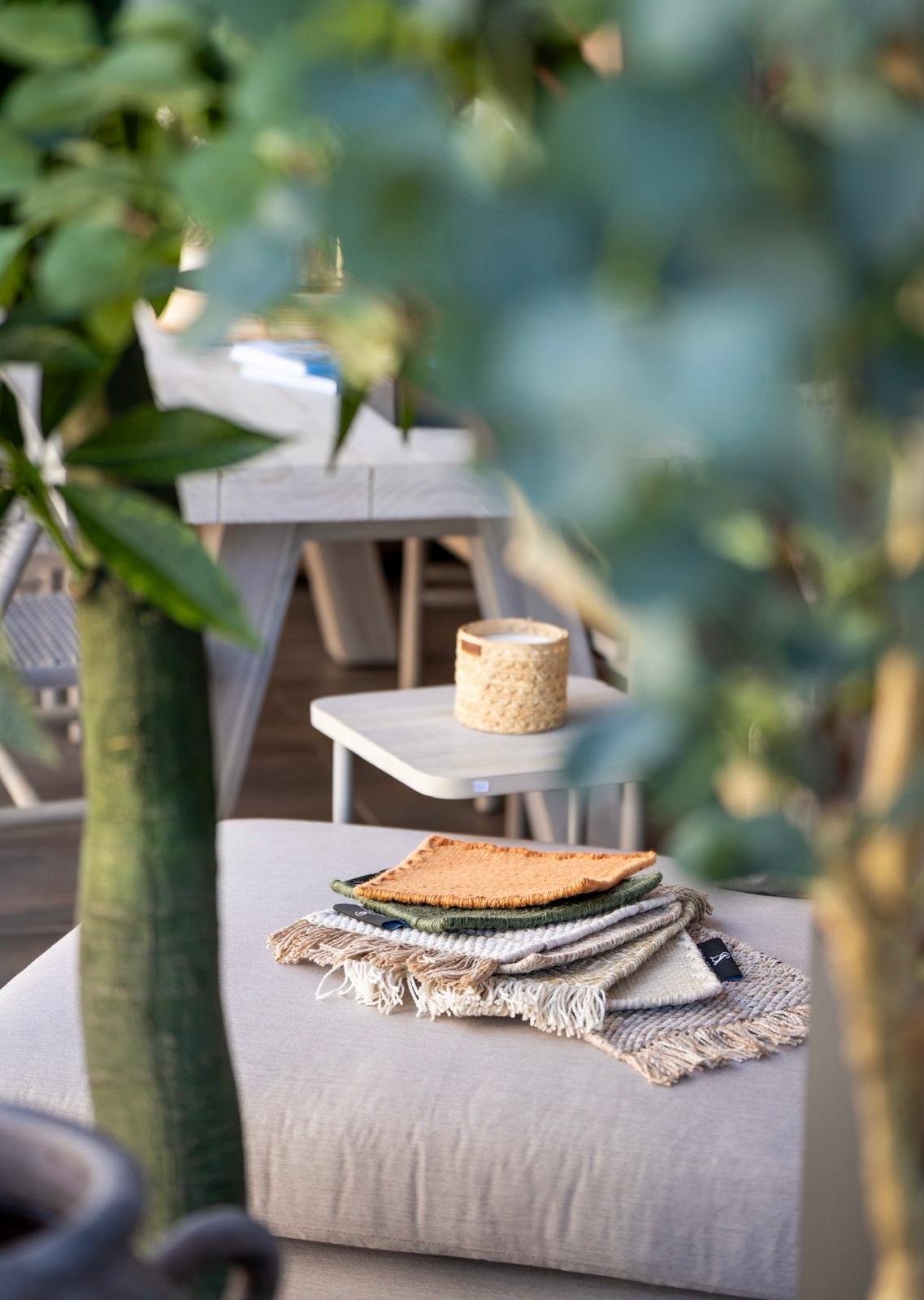
Outdoor rugs — yes, really, and yes, they’re wonderful
If you’re used to Northern European weather, outdoor rugs probably never crossed your mind — with rain most of the year, why bother? But the Algarve calendar works differently and we are so lucky here: put a rug out in April, leave it until the end of October, and enjoy it the entire time. It’s one of the easiest ways to bring warmth and personality to a terrace or poolside.
The best outdoor rugs today are hand woven from recycled plastic fibres, and the technology has genuinely caught up with the look and feel — you’d swear you were touching wool or a soft indoor weave, not something built to survive a summer outdoors. From a good brand, colours hold beautifully too, with no fading. It’s a small addition that makes an enormous difference to how a space feels.
Fabrics that work indoors and out
Outdoor fabric technology has come a long way from the stiff, plasticky stuff of a decade ago. The good performance collections now are soft enough, and beautiful enough, that we use them indoors too — especially in south-facing homes where clients wander in from the pool in wet swimwear with sun cream still on. Clients increasingly want their indoor upholstery to be just as low-maintenance as their outdoor pieces, and modern indoor/outdoor fabrics let us deliver that without the room looking or feeling like a hotel lobby.
Lighting — the detail people forget, and instantly regret
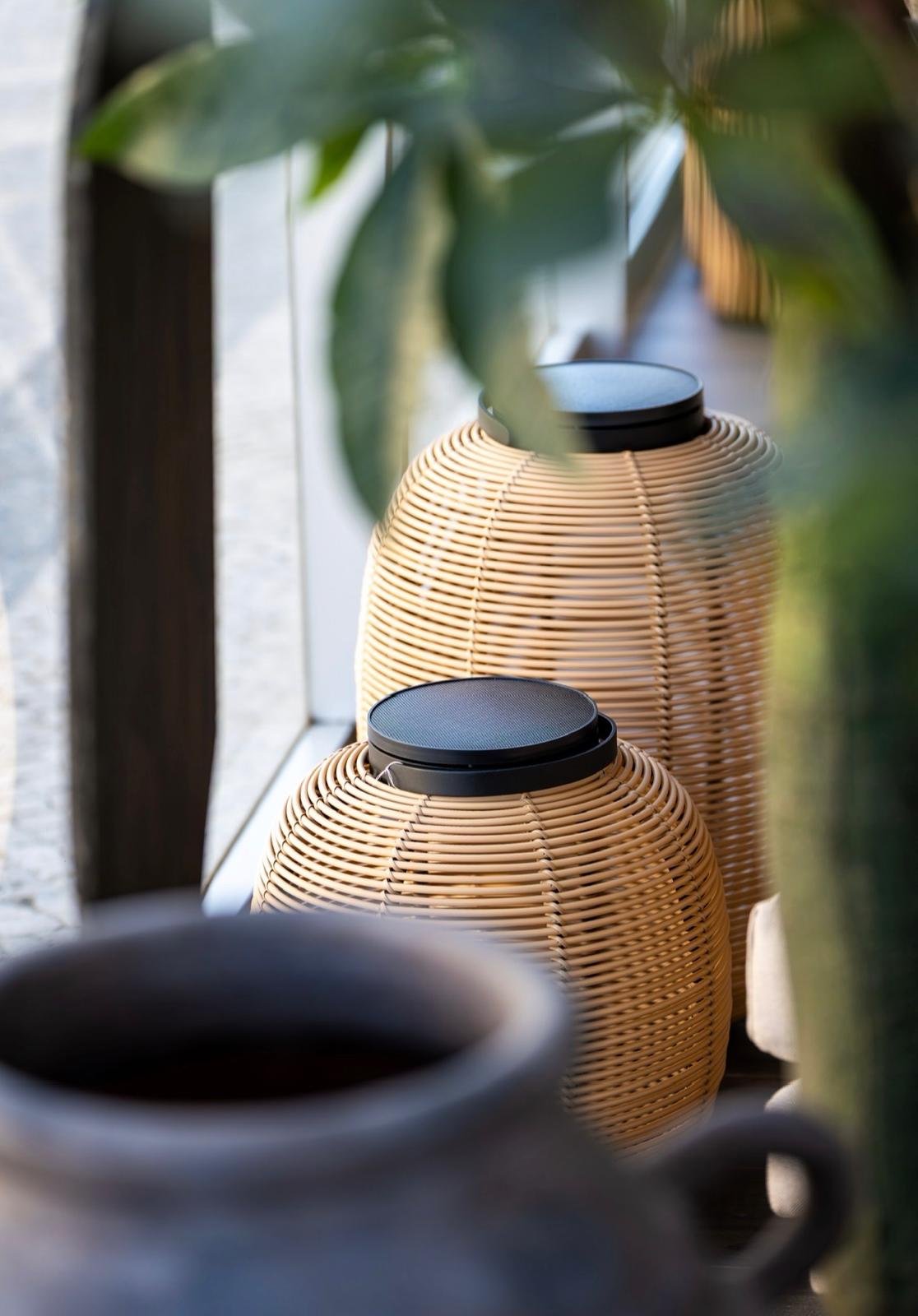
Outdoor lighting is where quality really shows its worth, and where corners get cut most often. If you’re anywhere near the coast, salt air is unforgiving on cheap fixtures — the wrong finish will start rusting and pitting within a season, and once corrosion sets in, it spreads fast. It’s one of those things that looks fine in the shop and looks tragic eighteen months later.
The fix is simple: invest in marine-grade fixtures designed for coastal exposure, and check the finish, not just the design. A beautiful fitting in the wrong material is a short-term investment in a rust stain. Where the lights actually go is a separate conversation, and one we have with every client — it’s why our 3D projects always include a lighting plan.
The takeaway
Living well in the Algarve means designing for how a home is actually used here — indoors and out, in full sun, near the sea. Get the material choices right — furniture, rugs, fabric, lighting — and your outdoor spaces stay as good-looking in year five as they were on day one.
We wrote about how outdoor living became such a large part of our work in The Outdoors Season is Here, and you can see our completed projects here.
Materials at a glance
| Material | What it gives you | What to watch for |
|---|---|---|
| Untreated (weathered) teak | Zero maintenance; silvers to a soft grey and moves naturally with the climate | The colour changes over time |
| Oiled teak | A warmer honey tone and richer colour | Annual oiling |
| Woven / rattan-style | Holds beautifully for years when well made | Cheap versions aren't UV-stabilised and can warp or collapse |
| Outdoor rugs | Warmth and personality, in place from April to the end of October | Choose a good brand so the colours don't fade |
| Indoor/outdoor fabrics | Soft, low-maintenance, and good enough to use indoors too | The stiff, plasticky fabrics of a decade ago are long gone |
| Lighting | Marine-grade fixtures designed for coastal exposure | The wrong finish rusts and pits within a season |
Frequently asked questions
Which teak finish needs less maintenance?
Untreated, weathered teak needs none. Left to the elements, it silvers to a soft grey. Oiled teak keeps a warmer honey tone but needs oiling once a year.
Can woven or rattan-style furniture be used outdoors in the Algarve?
Yes, but only from brands that engineer it for sun and heat. Cheap versions use fibres that aren't UV-stabilised, and extreme heat makes them warp or collapse.
Do outdoor rugs really work in the Algarve?
Yes. A rug put out in April can stay until the end of October. The best ones are hand woven from recycled plastic fibres, and from a good brand the colours hold without fading.
What should I look for in outdoor lighting near the coast?
Marine-grade fixtures designed for coastal exposure. Check the finish, not just the design: the wrong finish starts rusting and pitting within a season, and once corrosion sets in it spreads fast.